

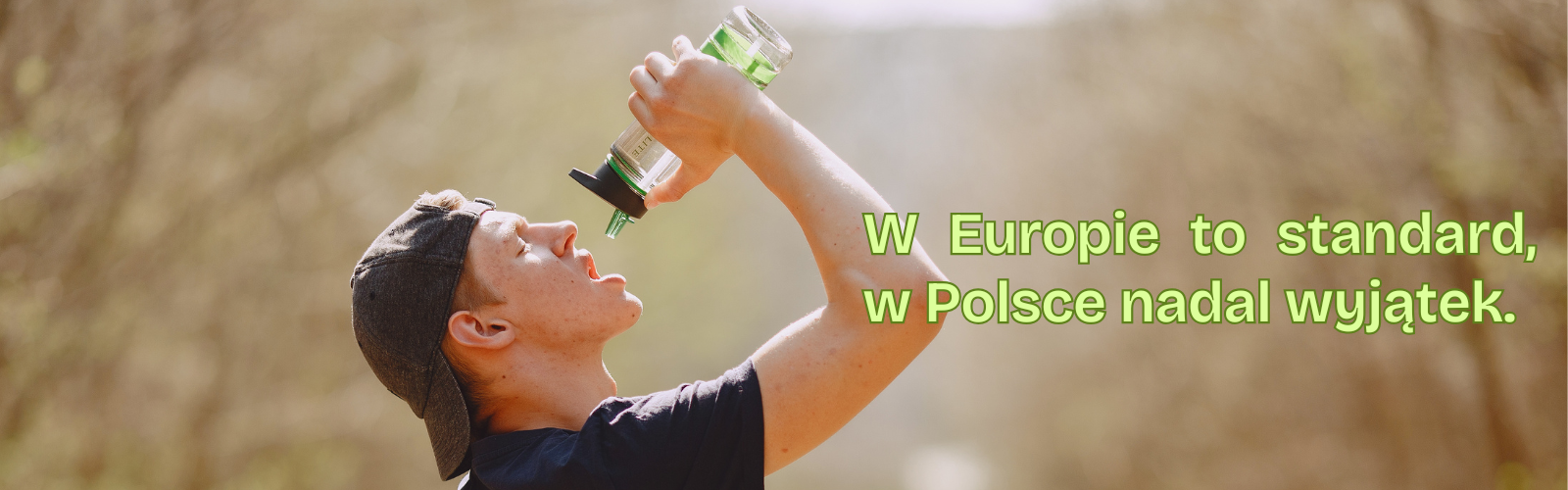
Can you imagine a city where you don’t have to buy a bottle of water every time you get thirsty?
In many European cities, this is simply part of everyday life. Drinking fountains and free water refill stations can be found wherever people are: along promenades, in squares, parks, and walking paths. You just take out your bottle, fill it up, and keep going. No plastic waste, no need to look for a shop, and no wondering whether you can ask for a glass of water.
This isn’t an eco-friendly gimmick or a tourist attraction. It’s an element of well-designed public space.
And that’s what makes you stop and think.
Access to drinking water isn’t determined by the climate or local customs. It’s the result of a conscious decision. Someone decided that residents and visitors should have easy access to water and planned the necessary infrastructure. Someone chose to put people and their basic needs before yet another point of sale.
Cities aren’t the way they are because they simply “turned out that way.” They are the way they are because we chose to create them that way.
That’s why access to drinking water in public spaces shouldn’t be treated as a luxury or an additional service. It should be a standard that improves residents’ quality of life, encourages people to drink more water, reduces single-use plastic consumption, and makes cities more welcoming.
So the question isn’t whether it can be done.
The question is why we still make this choice so rarely.
At Tovoda, we believe that access to free drinking water should be just as obvious as access to a public toilet or a pedestrian crossing. That’s why, every day, we work to add more and more places to the map where people can drink water for free or refill their own bottles.
Because change doesn’t start with grand declarations. It starts with simple solutions that make everyday choices easier for people.


